Last updated November 23, 2026
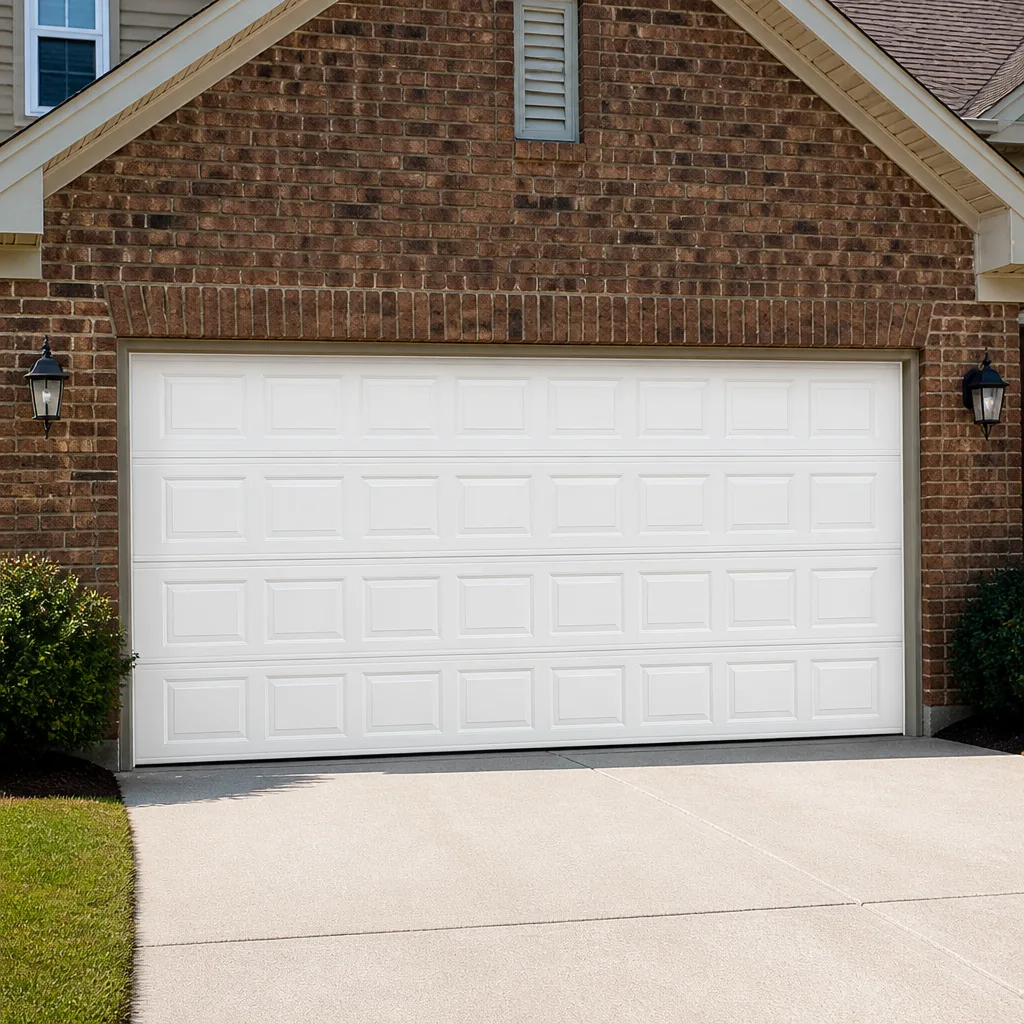 Raised-panel steel
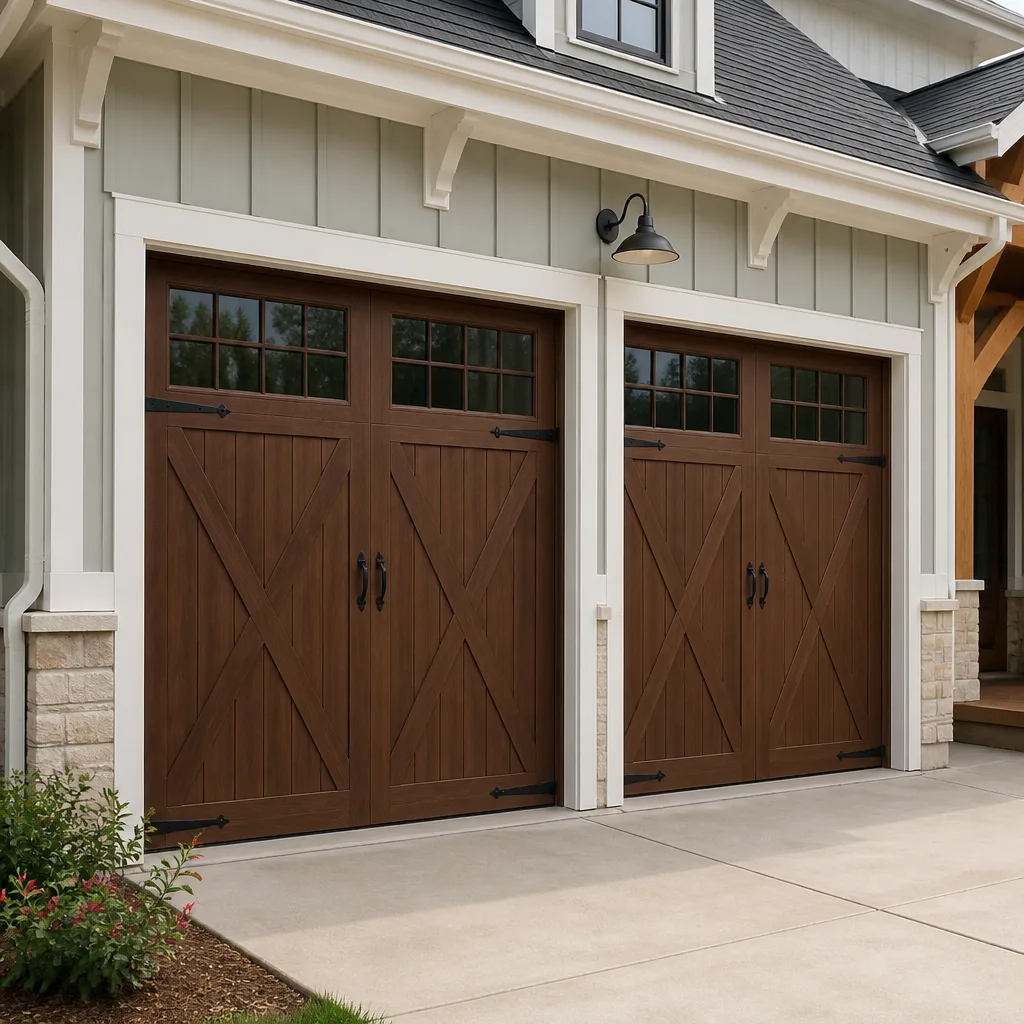 Carriage house
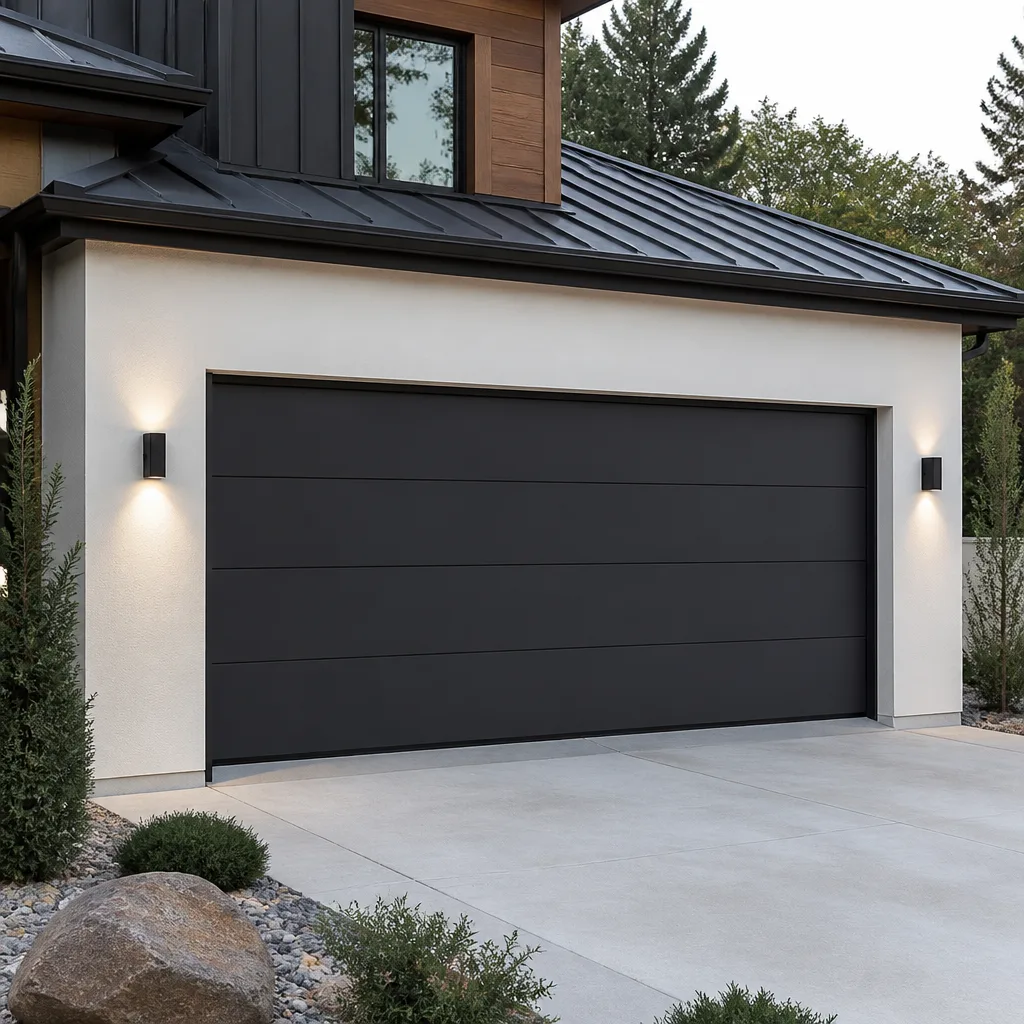 Modern flush
 Full-view glass
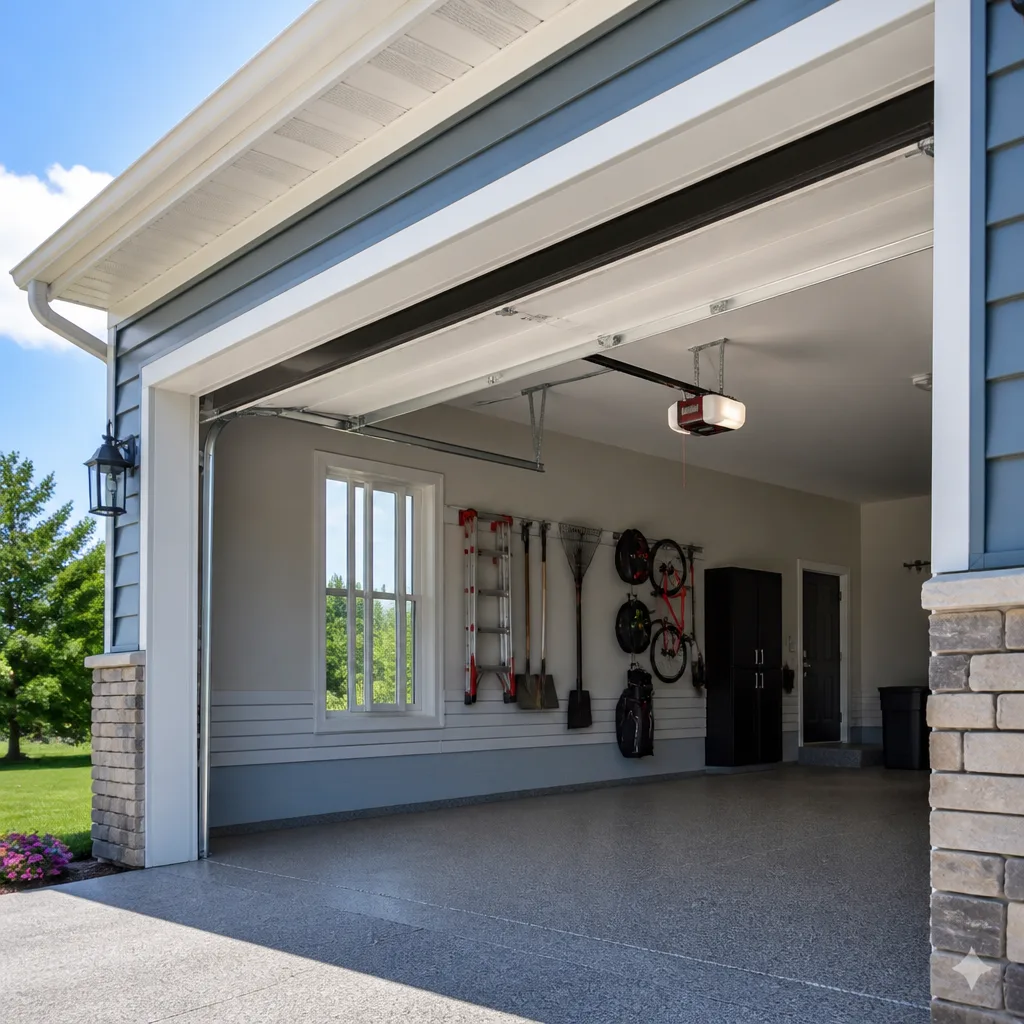 LiftMaster openers
 Chamberlain openers
Full 25-point door and opener safety check with every visit - springs, cables, rollers, tracks, and your LiftMaster or Chamberlain opener included
You get a price before we start. It does not change when the pro arrives.
Get your free estimateDIY vs Professional Garage Door: The Short Pump Homeowner’s Decision Guide
Most home repair decisions come down to time and money. The garage door doesn’t. A torsion spring holding a 150-pound door in balance stores enough mechanical energy to cause serious injury in less than a second if it lets go while you’re winding it, and that changes the math entirely. Short Pump homeowners ask us some version of the same question almost every week: can I do this part myself? The honest answer is that a garage door has two distinct zones. One rewards a careful DIYer. The other doesn’t. This guide maps both zones, compares the real costs, and gives you a five-question checklist so you land on the right answer for your door, not a blanket recommendation.
Quick Answer
You can safely handle cosmetic and low-tension work yourself: weatherstripping, opener remote programming, panel replacement, and a visual check of the whole system. Anything involving torsion springs, extension springs under load, cables, spring anchors, or adjustments that put your hands near a wound spring should go to a trained technician. In Short Pump, most simple repairs fall in the $180 – $340 range professionally, and a spring replacement typically costs less than the recovery job that follows a failed DIY attempt. The written estimate sets the final price before any work begins.
Styles & brands we work with
- Raised-panel steel
- Carriage house
- Modern flush
- Full-view glass
- LiftMaster openers
- Chamberlain openers
Table of Contents
- The Two Zones of a Garage Door System
- What Short Pump Homeowners Can Safely Do Themselves
- The Components That Require a Professional
- DIY vs Professional: The Real Cost Comparison
- Torsion vs Extension Springs: Why Neither Is DIY-Friendly
- What YouTube Tutorials Don’t Show You
- A Five-Question Decision Checklist
- Short Pump Climate, Doors, and Seasonal Wear
The Two Zones of a Garage Door System
Think of your door as two systems bolted together. One is the door itself: panels, hinges, rollers, weatherstripping, and tracks. The other is the drive and balance system: springs, cables, drums, and the opener. The first zone is forgiving. If you install a threshold seal slightly crooked, the worst outcome is a small draft. The second zone is not forgiving. A torsion spring carries the full weight of the door through its turns, and if it releases while under tension, the energy goes somewhere. Cables under load behave the same way. That distinction, not a general suspicion of DIY work, is why the answers differ.
Here’s how the split shakes out across most doors we see in Short Pump:
- Safe for a capable homeowner: weatherstripping and bottom seals, panel replacement, roller replacement on extension-spring doors, opener remote programming, sensor alignment, track cleaning, and light lubrication.
- Requires professional handling: torsion springs, extension springs under tension, cables, spring anchors, torsion bars, cable drums, and anything that involves unwinding or winding a spring.
- Gray area: opener gear and logic board replacement, roller replacement on torsion doors (the cables stay loaded even when the door is down), and re-aligning a track that has been bent.
That last category is where we get the most calls halfway through a project. If the door has torsion springs, even changing a roller means the door has to be held in a safe position while you work, and that isn’t something to figure out by watching a video. Ask a trained technician to handle the gray area in Short Pump unless you’ve worked on doors before and know what holds the load.
What Short Pump Homeowners Can Safely Do Themselves
A homeowner with basic tools and a ladder can handle the cosmetic and low-tension work without any added risk. These are the jobs where a bad result still leaves you a functioning door.
- Weatherstripping and bottom seals. Fit the rubber or vinyl seal along the bottom edge of the door and the sides of the jamb. The trick is getting the seal snug against the floor without dragging; leave a gap of about the thickness of a coin where the door meets the ground, or the opener will strain every time you close it.
- Opener remote programming. Pairing a remote or a wireless keypad is a button sequence on the opener head, and every modern brand has one. LiftMaster and Chamberlain remotes pair differently from Genie remotes, and older Craftsman remotes use a different sequence again; the manual tells you which. We cover the exact steps for each brand on our opener repair page, but this is genuinely a DIY-safe task.
- Panel replacement on steel doors. A single dented or damaged panel can be swapped out without touching the springs if you can remove and reinstall the hinges and rollers one at a time while the door is closed. Clopay and Amarr both make panel replacement kits for their most common door lines.
- Roller replacement on extension-spring doors. When the springs sit horizontally along the ceiling tracks, the door’s weight is carried by the springs, not the cables. Nylon rollers can be swapped one at a time if the door is fully closed. On torsion doors, skip this.
- Sensor alignment. The two photo-eye sensors at the bottom of the tracks need to see each other. If the opener won’t close the door, check for a spider web, a knocked-out mounting bracket, or a small child’s toy in the beam. Realign until the indicator light on the sensor is steady.
- Lubrication and cleaning. A dry silicone spray on the hinges, rollers, and springs (never grease on the tracks) keeps the door quiet and reduces wear over time.
Anything that involves unbolting a spring, a cable, or a torsion bar to get at something else is off this list. A weatherstrip job that requires removing the bottom bracket that holds the cable isn’t a weatherstrip job. It’s a cable job that happens to involve weatherstripping.
The Components That Require a Professional
These are the parts of a garage door that cause real injuries, not just frustration. A technician trained to work with springs wears the right gloves, uses the right winding bars, and can calculate the torque needed for the specific door. That’s the difference between a repair that holds and a repair that fails on the third cycle.
- Torsion springs. Mounted above the door on a shaft, torsion springs carry the door’s full weight through a set number of turns. Winding a new spring by hand requires a torsion bar and a very specific torque calculation based on door weight, height, and drum size. Winding with a wrench (as some videos suggest) gives you less control and no margin for error.
- Extension springs. Mounted to the sides of the door, these carry the door’s weight through a different geometry. They’re slightly more visible than torsion springs and slightly more accessible to a DIYer, but that access is misleading. They store the same dangerous energy and snap back violently when they release.
- Cables and cable drums. Cables sit under continuous tension and are what keep the door level as it rises. A slipped cable can leave the door hanging on one side with no warning, and a cable that snaps under load is every bit as dangerous as a spring.
- Spring anchors and torsion bars. The brackets that hold the spring assembly to the wall and the bars that connect the springs to the drum are all part of the load path. Any of them failing puts the whole door down.
- Opener limit switch adjustment. The limit switches on the opener control how far the door travels up and down. Adjusted wrong, the opener drives the door into the floor (bending panels) or stops short (leaving a gap that lets in rain and pests). On a torsion door, you can’t test the adjustment safely without the door being balanced.
- Track realignment after a collision. A bent track that has pulled the door off the vertical rails is a structural problem, not an adjustment. Attempting to bend the track back into place while the door is still attached is how people get hurt.
If your door has failed in a way that leaves it stuck open, off-track, or hanging on one cable, that’s not a weekend project. That’s what our Short Pump Garage Door Repair Pros page is about – emergency service is a standing offering for us, and it covers exactly this situation. If the door is stuck closed with a car on the other side, don’t force it.
DIY vs Professional: The Real Cost Comparison
The DIY cost comparison almost always fails at the same point: the parts bill and the labor bill get compared, but the time, the risk, and the odds of a second repair never make it into the tally. Here’s what the comparison actually looks like for the most common jobs. Prices are typical estimates for the Short Pump area, not exact market prices; the written estimate from a technician sets the final price.
| Job | DIY Parts Cost | Typical Professional Estimate |
|---|---|---|
| Bottom seal / weatherstripping | $20 – $50 | $90 – $160 installed |
| Single roller set (6 – 10 rollers) | $25 – $60 | $120 – $200 installed |
| Opener remote or keypad programming | $0 (if manual is at hand) | $0 – $45 (often free during a service call) |
| Single torsion spring replacement | $40 – $90 for the spring alone | $180 – $340 per spring |
| Matched pair of torsion springs | $80 – $180 for the pair | About twice the single-spring range |
| Panel replacement (single) | $80 – $200 for a stock panel | $250 – $450 installed |
| Opener replacement | $150 – $300 for the unit | $400 – $700 installed (door and opener together) |
Two things get lost in the DIY column. First, the time: a spring job that a trained technician does in under an hour is a whole afternoon (and probably a second trip to the hardware store) for a homeowner. Second, the recovery cost. A failed spring job that bends a panel or takes out a cable turns a single repair into a two-part job, and the second part is always more expensive than the first. What would have been a single spring replacement at the low end of the range above becomes a spring job plus a cable or panel job plus the door alignment. That’s the $200-becomes-$600 pattern we see when a DIY attempt goes sideways, and the recovery call is never the one the homeowner planned to make.
Every quote we give in Short Pump is agreed before any work starts. There’s no invoice surprise after the fact, and if the door needs more than we quoted, we call before we touch it. That commitment is the most useful part of the professional option, more than the labor itself.
Torsion vs Extension Springs: Why Neither Is DIY-Friendly
Extension springs are marginally more DIY-accessible than torsion springs in one narrow sense: they’re mounted to the sides of the door, so you can see them, and some of their hardware can be reached without climbing over a torsion bar. That’s the entire advantage. In every other respect, they’re just as dangerous. Extension springs store the same energy as torsion springs and snap back along the same line of travel. The cable that runs through them (on modern doors with safety containment) is there specifically to keep the spring from flying across the garage if it breaks. If your door has old extension springs without containment cables, that’s a safety issue worth fixing before anything else.
Torsion springs are worse for a DIYer because the energy is concentrated on a shaft. Winding a torsion spring by hand requires a winding bar seated in a specific hole in the collar, and the door’s weight has to be balanced against the spring force as you go. Release the bar early, or use a tool that doesn’t fit the collar, and the spring unwinds in the direction of your arm. That’s why every manufacturer prints a warning on the spring itself, and why trained technicians treat a torsion bar change as the part of the job to slow down for. Our garage door spring repair page covers how we approach both spring systems, and if you’re considering a DIY spring repair, read that first.
One more thing: spring sizing isn’t universal. A torsion spring has to be matched to the door’s weight and the number of turns it needs. Get the size wrong and the door won’t balance, the opener will strain, and the spring wears out early. The right spring for your Short Pump door depends on the door, not the shelf at the hardware store.
What YouTube Tutorials Don’t Show You
Tutorials are good at the parts that look like the whole job: unscrewing, lifting, fitting, screwing back. They’re quiet about the parts that decide whether the repair holds. Those parts are why we treat certain repairs as specialist work and leave the rest to careful DIYers.
- Torque calculation for spring sizing. A spring has to deliver enough force to balance the door, and not so much that the door wants to rise on its own. The formula involves door weight, door height, drum diameter, and cable length. A tutorial can’t calculate it for your door; it can only tell you to reuse the old spring, which fails the moment the old spring was the wrong one.
- Cable drum alignment. If the drum on one side sits a fraction off from the other, the door goes up crooked, rubs the tracks, and eventually wears out the opener’s drive gear. Alignment is a visual and physical check that requires the door to be up and the springs to be properly wound. It’s not a step you can practice on a camera.
- Limit switch adjustment on openers. The limit switches determine where the door stops in both directions. Adjusted with the door detached (as most tutorials suggest for safety), the setting changes once the door is reattached and under spring tension. The result is a door that stops short or slams into the floor, and the fix is another adjustment pass with the door loaded.
- Bearing plate and end bracket torque. The lag screws that hold the spring assembly to the wall and the end brackets that carry the torsion shaft need to be tight enough to hold, and not so tight they crack the bracket. A cracked end bracket with a loaded torsion spring above it is a fall risk.
- Door balance check. After any repair on the spring or opener side, the door has to be tested by hand (disconnect the opener, lift the door halfway, and let go) to confirm it stays in place. Tutorials skip this because it looks like the job is already done. It isn’t.
None of this means a homeowner can’t learn to work on their door. It means most of the learning happens in person, under trained eyes, on doors that fail in a controlled way. Watching a video doesn’t compress that learning. Our technicians have up to 9 years of experience and have seen what happens when a homeowner misses one of these five steps.
A Five-Question Decision Checklist
If you want a rule you can apply to your specific door right now, run through these questions in order. The first “yes” tells you where the job lives.
- Does the work put your hands anywhere near a spring or cable under tension? If yes, call a professional. Whether it’s a torsion spring above the door or an extension spring at the side, the risk isn’t something to take on without training and the right tools.
- Can you describe the last time a technician inspected the door system? If you can’t, or it’s been years, book an inspection first. A door with a worn spring or a fraying cable is a door that’s about to fail, and an inspection is far cheaper than a recovery job.
- Does the repair need the door to move while you work? Rollers, tracks, opener arms, hinges, and cables all interact with the door’s movement. If adjusting one part changes how another part sits, that’s a professional job. Weatherstripping doesn’t move; springs and cables do.
- Are you comfortable with a ladder, tools, and the possibility that the job gets harder halfway through? If you’ve done similar work before and you know where the manual override and emergency release are, the DIY-safe list is genuinely open to you. If any of that feels uncertain, the professional route is not an upsell; it’s the shorter path.
- Is the door secure right now? A door that’s stuck open, hanging off a track, or won’t lock leaves the garage and everything in it exposed. In that case, the question isn’t DIY vs professional. It’s how soon a technician can get to your Short Pump home, and the answer is “today” for a door that’s left you unsafe or trapped a car.
Most homeowners find that question one already answered the decision for them. The rest of the questions are about what to do once you’ve called: whether to replace the opener along with the spring, whether the door needs a new panel or a new door, and what the whole project costs. Those are conversations to have with a technician who works on the brand you already have installed.
Short Pump Climate, Doors, and Seasonal Wear
Short Pump sits in a pocket of central Virginia where the door sees real seasonal swing: humid summers, cold winters, and enough temperature cycling that the metal parts expand and contract against the wood and vinyl of the house. That cycling works the weatherstripping loose, works the hinges dry, and adds small stress cycles to the springs and cables. A door that gets a little lubrication and a visual check twice a year lasts longer than one that doesn’t, and those are both jobs a homeowner can do. What a homeowner can’t do is assess the wear on a spring by eye; the sag or the gap at the coil is subtle until it isn’t.
The housing stock in Short Pump can run either way on this. Many homes have a newer steel door with a modern torsion spring system and a smart-connected opener from LiftMaster or Chamberlain. Others still have an older door with a Wayne Dalton or Craftsman opener that’s been reliable for years and is now on its second set of springs. Both are worth maintaining, and both are examples of a door system that a generalist handyman shouldn’t touch. Garage doors are the entire trade at garage door repair; that focus is why we can work on what you already have rather than only on what we sell.
Two local weather notes are worth knowing. Summer humidity and a heavy afternoon thunderstorm are the usual suspects for doors that stop closing properly – a swollen bottom seal, a sensor knocked out of alignment, or a track that has drifted from the heat. Winter is when springs fail most often, because cold metal is less forgiving and the door is heavier to lift against a stiff spring. If your door is old and its springs are original, get ahead of the winter failure rather than wait for it.
Common Mistakes to Avoid
- Winding a torsion spring with a wrench instead of a winding bar. Some tutorials suggest a wrench or a screwdriver because it’s what a homeowner has on hand. It gives you no control over the release, and it’s how DIY spring injuries happen.
- Replacing one spring of a matched pair. If your door has two torsion springs, they’ve been carrying the load together since installation. Replacing one puts the full load on the newer spring and shortens its life. Replace both.
- Oiling the tracks. A noisy door usually needs dry silicone spray on the hinges and rollers, not grease on the tracks. Grease on the tracks attracts grit and slows the door down.
- Forcing an off-track door back into the tracks. In Short Pump, a door that comes loose on one side usually has a bent track or a slipped cable, not just a rider that needs a shove. The shove is what bends the panel.
- Disconnecting the opener and leaving the door unsupported. Once the opener is disengaged, the spring balance is the only thing holding the door up. If the springs are worn, that’s the moment they let go.
- Skipping the balance check. The five-second test on any repaired door (disengage, raise it halfway, let go, watch whether it stays) tells you whether the repair actually took. A door that drifts down on its own is a door that will drop the next time the opener lets go.
- Ignoring a bent track because the door still closes. A slightly bent track rubs the rollers and slowly wears the opener. On a torsion door, the bend is often the visible edge of a spring or cable problem, and it gets worse.
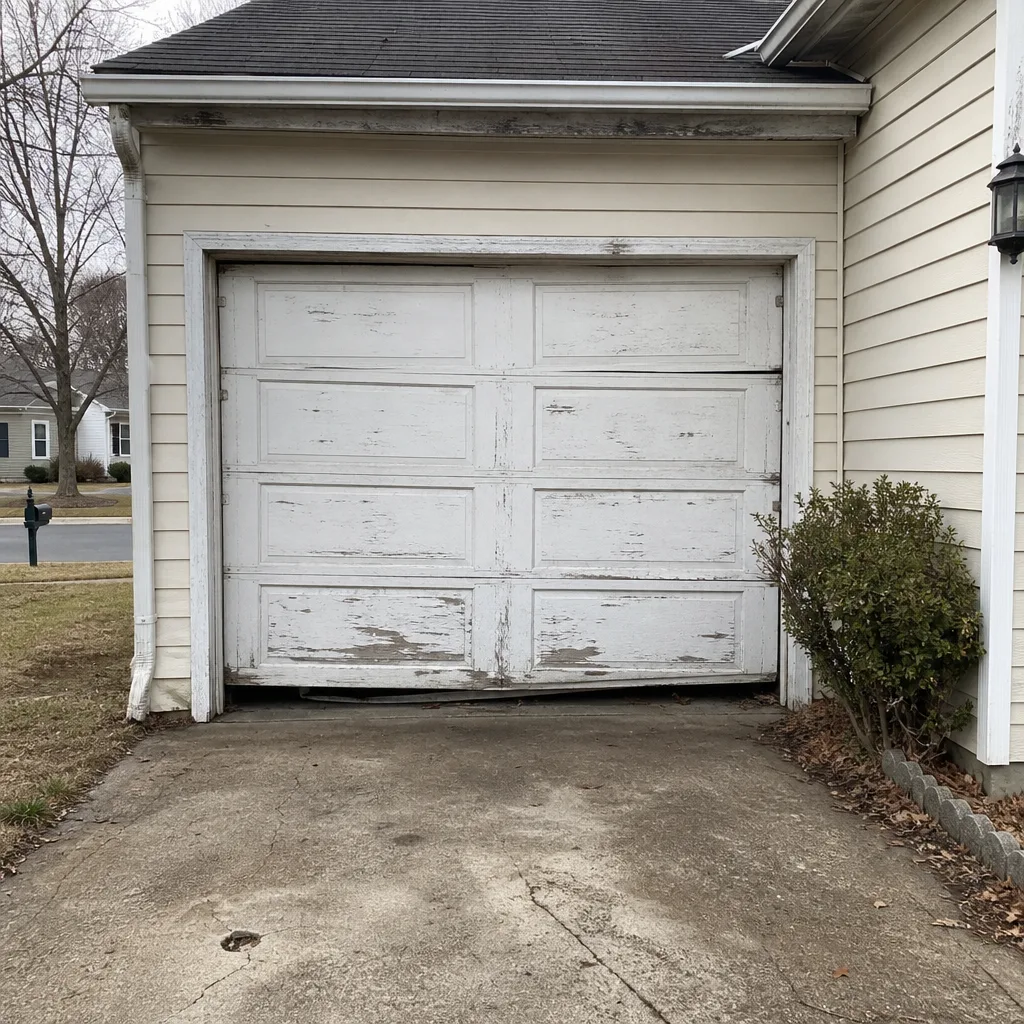
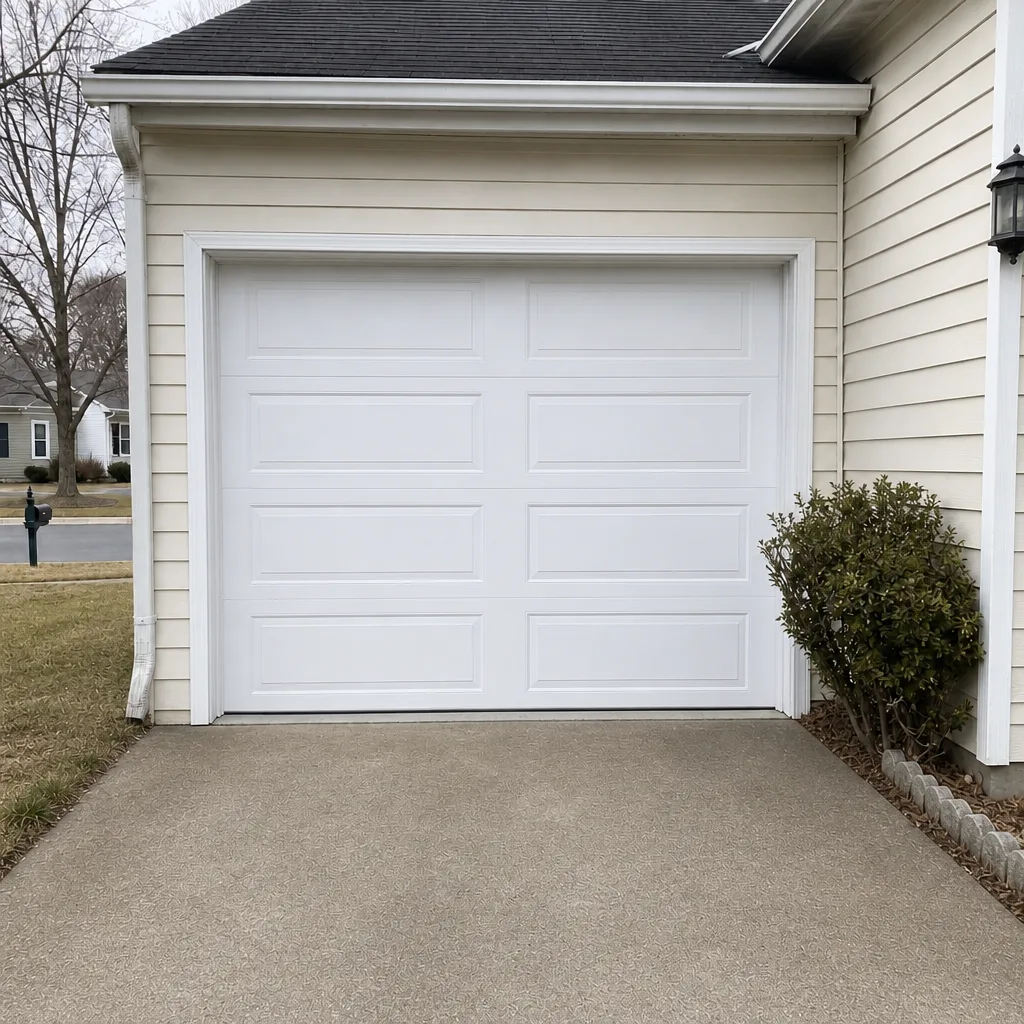
See the difference
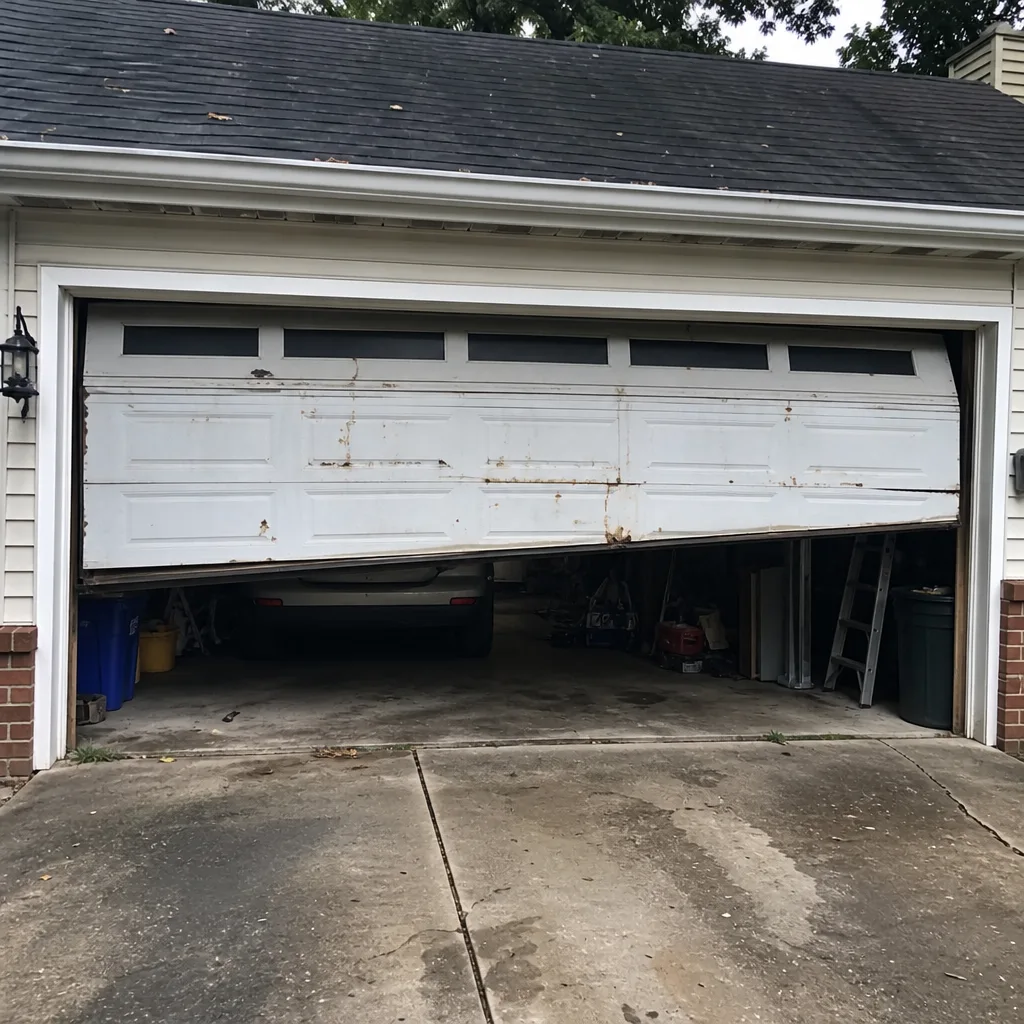 Before
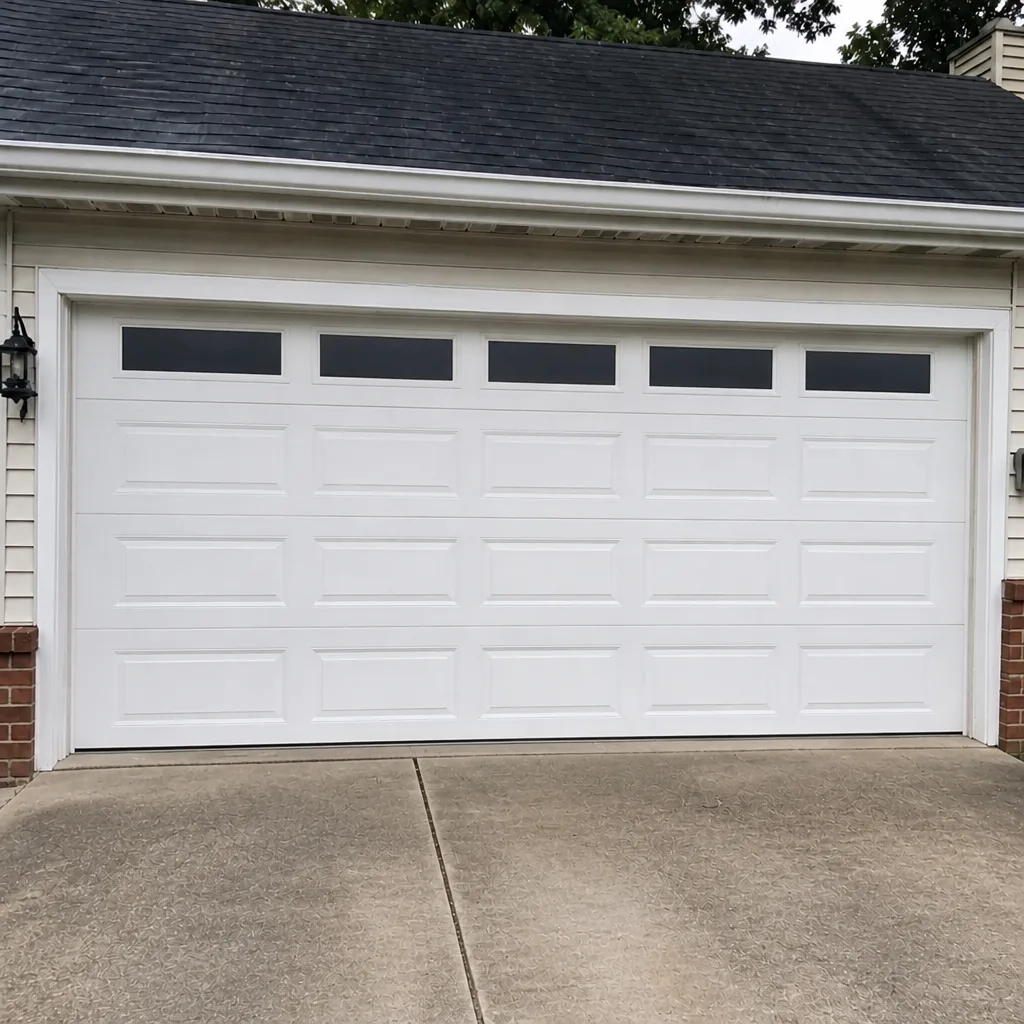 After
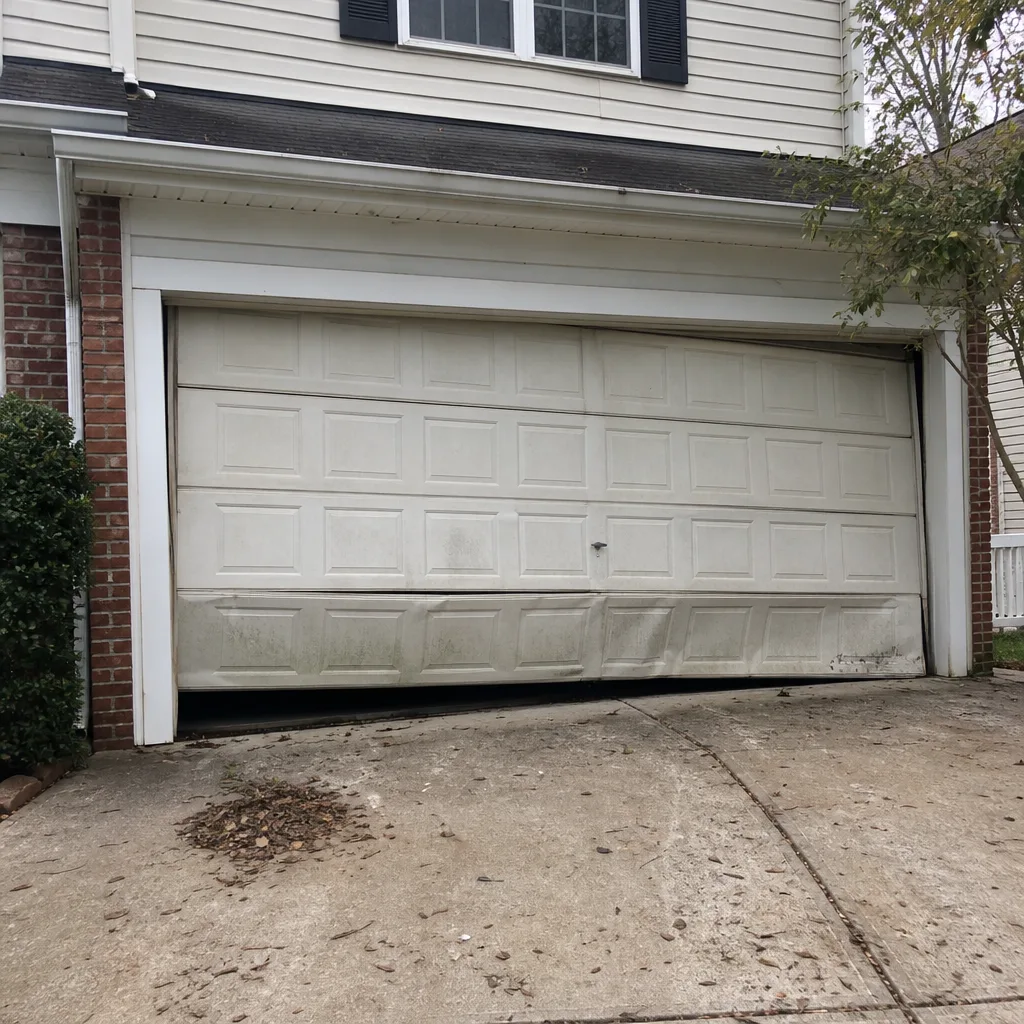 Before
 After
 Before
 After
When to Call a Professional
Call a trained technician when the work touches a spring, a cable, or a loaded part of the door system; when the door is off its track, stuck open, hanging on one side, or won’t lock; and when any repair has to happen with the door in motion. Call immediately if the door traps a car, leaves the house insecure, or makes a cracking sound and then stops working. That’s what emergency service means on this side of the phone line: not a 48-hour callback, but a trained technician scheduled against a door that’s actually failed. For the rest – spring replacements, opener diagnosis, a panel swap, or the planning conversation about a full door replacement – a normal service call is fine. Short Pump Garage Door Repair Pros offers free estimates in Short Pump, and we work on the brands homeowners already have installed, including Clopay, Amarr, and Wayne Dalton doors and LiftMaster or Chamberlain openers. Call (833) 468-5635 to get a slot or a quote. If you’ve been researching garage door opener repair separately from the door itself, call once and we’ll handle both components in the same visit.
Frequently Asked Questions
No, and it isn’t a close call. Torsion springs and loaded extension springs store enough energy to cause serious injury if they release while you’re working on them, and the sizing has to be calculated for your specific door. A trained technician uses winding bars and confirmed specifications; a homeowner with a wrench is guessing. If your spring has broken, call (833) 468-5635 for an estimate – spring repairs are among the most common service calls in Short Pump, and they’re priced per spring with the pair usually replaced together.
Typical estimates in the Short Pump area run $180 – $340 for one torsion spring, and roughly twice that for a matched pair. Extension spring replacement usually falls in a similar range per spring. Those are estimates, not exact prices; a technician confirms the final number in writing before any work starts. Call (833) 468-5635 for an exact quote – estimates are free.
Only if the door is in worse condition than the call suggested, and only after you agree to the change. Our quotes are agreed before any work starts, so there’s no surprise invoice. If a job grows because a cable is damaged alongside the spring, we stop and call you with the new number before proceeding. That’s the rule, not a courtesy.
The local professionals we connect you with are licensed and insured as their state requires, and they work on garage doors as their core trade rather than as a side service. Our technicians have up to 9 years of experience. If you want the specifics for your area, ask when you call and we’ll confirm.
Sometimes. If the opener light is flashing and the door goes up a few inches and reverses, the photo-eye sensors are the usual cause, and checking for a misaligned sensor or a spider web is a safe DIY fix. If the door won’t close at all, hangs unevenly, or the spring has visibly broken, that’s a call. Call (833) 468-5635 and we’ll figure out which one you’re facing in a few minutes on the phone.
It depends on what “broken” means. A door that’s stuck open leaves the garage and its contents exposed, and one that’s stuck closed traps a car and can shut a household out of its own entrance. In either case, don’t wait. A door that’s off its track or hanging on one side is a safety issue and shouldn’t be operated at all. Call (833) 468-5635 and we’ll get a trained technician scheduled against the actual failure.
The Bottom Line
The DIY-vs-professional question for a garage door has a cleaner answer than most home repairs because the system splits into two zones. Cosmetic and low-tension work – weatherstripping, opener remotes, panel swaps, sensor alignment, lubrication – is safely within a careful homeowner’s reach. Springs, cables, drums, anchors, and anything that has to be done with the door in motion are not, because the stored energy in a wound spring isn’t theoretical. The cost comparison looks close only if you leave out time and risk; once you include them, the professional option is often the cheaper path. Run the five-question checklist before you start any repair. If it points you toward a technician, or if your door is already stuck, trapped a car, or left your Short Pump home insecure, call us and we’ll treat it as the urgent call it is.
Call Short Pump Garage Door Repair Pros at (833) 468-5635 for a free estimate. We work on the door and the opener in one visit, on the brands you already have installed, and we confirm the price before any work starts.
Written by the team at Short Pump Garage Door Repair Pros.